Tel :

Tel :
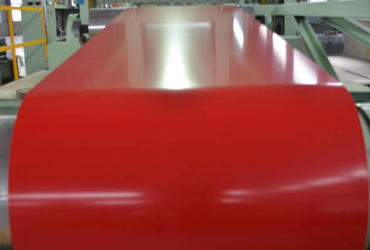

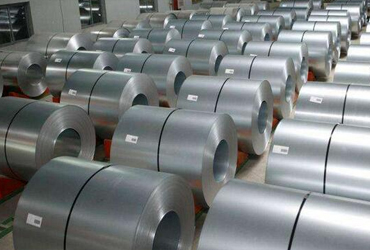
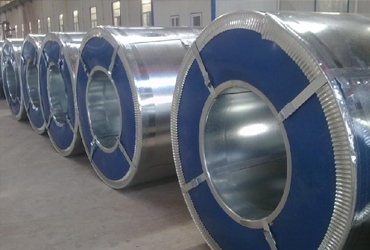
The passenger railway project in northern Mexico is entering the phase of substantive construction preparation. S420GD+ZF Hot dip Zinc-Iron alloy coating (ZF) steel, The federal government has announced that preliminary work has begun on an elevated railway section spanning approximately 9 kilometers (5.6 miles) through the Monterrey metropolitan area. Production of the 33,100 short tons of steel plates required for this structure is already underway in the state of San Luis Potosí.
This elevated section will carry the passenger railway—which runs from Mexico City to Nuevo Laredo—through the Monterrey metropolitan area. The 33,100 short tons (equivalent to approximately 30,000 metric tons) of steel will primarily be used for the main structural framework of the viaduct.
Monterrey serves as a vital industrial and transportation hub in Mexico, characterized by a dense concentration of urban roads, freight railways, underground utility lines, and other infrastructure. S420GD+ZF Hot dip Zinc-Iron alloy coating (ZF) steel,Andrés Lajous Loaeza, head of Mexico’s Railway and Integrated Public Transport Agency, noted that the segment passing through the metropolitan area of Nuevo León was the most technically challenging part of the project from its inception, which is why it was the final section to enter the bidding process.
To avoid widespread disruption to local road traffic and existing strategic infrastructure, the new passenger railway will traverse the urban area of Monterrey via an elevated structure. Preliminary work includes exploratory excavation and geotechnical investigations spanning approximately 9 kilometers, as well as the identification of existing utility lines and infrastructure along the route to determine whether any relocation or adjustments will be required during construction.
Lajous stated that the primary objective of these activities is to verify geological and topographical conditions, providing the necessary data for subsequent foundation work, pier placement, and the installation of steel structures.
The federal government has already placed orders for the steel plates required for the elevated viaduct. These plates are currently being manufactured in the state of San Luis Potosí—a development that signals the project’s transition from the planning and tendering phases into the stages of material procurement and preparation for heavy construction.
In addition to the viaduct in the Monterrey metropolitan area, another viaduct—spanning approximately 3 miles (4.8 kilometers)—is under construction on the section between Monterrey and Nuevo Laredo. This structure is designed to cross railway-highway grade crossings, major roads, and vehicle access routes.
Official data indicates that the construction of 42 bridge piers for this viaduct has been completed. The corresponding AASHTO-standard precast girders are currently in production and will be transported to the site for installation.
Across the broader Saltillo–Nuevo Laredo railway corridor, construction teams have completed site clearing and preparation for approximately 110.6 miles (178 kilometers) of the route, along with 19.3 miles (31 kilometers) of embankment filling.
Furthermore, 48 drainage structures have been completed along the alignment, with work currently progressing simultaneously across 18 active construction fronts. S420GD+ZF Hot dip Zinc-Iron alloy coating (ZF) steel,A smaller viaduct, measuring approximately 0.8 miles (1.3 kilometers) in length, is also under construction; 75 bridge piers have been completed, and foundation excavations have been carried out at 6 locations.
To accelerate track-laying construction, the Mexican government has begun building production facilities for railway sleepers. Plans include the production of 430,000 sleepers for the Saltillo–Monterrey section and 490,000 for the Monterrey–Nuevo Laredo section, totaling approximately 920,000 units.
Rolling stock procurement is also underway. Mexican authorities have announced that the first electric trainset for the line connecting AIFA Airport to Pachuca has been assembled and is expected to arrive in Mexico on July 25. Meanwhile, production has commenced for the first batch of 47 diesel-electric trainsets intended for the northern passenger rail projects.
The Monterrey viaduct is part of Mexico’s broader initiative to restore and expand its national passenger rail network. The next round of tenders will advance the Mexico City–Saltillo rail connection, encompassing the segment from Querétaro to San Miguel de Allende, with subsequent extensions toward San Luis Potosí and Saltillo.
The next phase of the project is expected to include the construction of six passenger stations, three auxiliary buildings, and several maintenance facilities. The overall plan aims to establish passenger rail connections from Mexico City to both Nuevo Laredo and Guadalajara, strengthening transport links between the industrial zones of central Mexico, the manufacturing hubs in the north, and the economic corridor along the U.S.-Mexico border.
Environmental and archaeological efforts are also underway. The Mexican government has stated that the rail projects have secured the necessary environmental impact permits and continue to implement ecological mitigation, prevention, and compensation measures, including the relocation and protection of flora and fauna.
Regarding archaeological investigations, excavation and artifact recovery efforts—conducted with the participation of Mexico’s National Institute of Anthropology and History (INAH)—are approximately 81% complete for the section between Saltillo and Nuevo Laredo.
Overall, the Monterrey viaduct is not merely a railway engineering project; it also represents a significant source of demand for steel. The large-scale procurement of approximately 30,000 tons of steel plates, prefabricated girders, railway sleepers, and other construction materials will stimulate activity in steel processing, the manufacturing of bridge components, and regional logistics. Furthermore, whether this section proceeds according to schedule will directly impact the overall construction progress of the passenger railway network in northern Mexico.