Tel :

Tel :
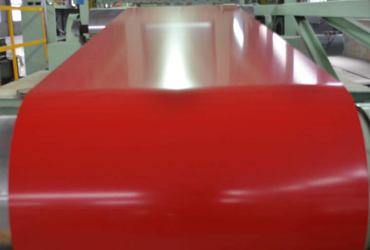
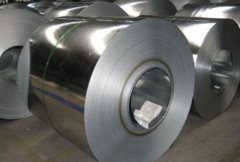
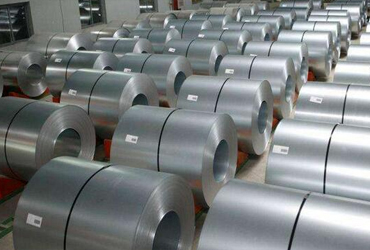
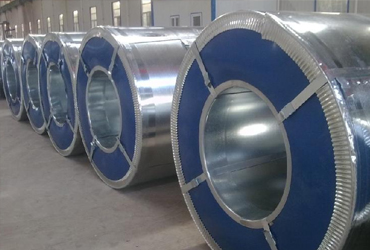
Thailand's steel industry is facing significant pressure due to the rise in international oil prices triggered by the conflict in the Middle East. S350GD+ZF Hot dip Zinc-Iron alloy coating (ZF) steel , As the industry relies heavily on imported iron ore, shipping costs have surged alongside oil prices, driving up steel production costs.
A vice chairman of the Federation of Thai Industries (FTI) stated that steel prices are expected to rise amidst mounting cost pressures, while industry production capacity could also be constrained.
He noted that the FTI is closely monitoring the situation and has advised steel companies to adjust their business strategies promptly to cope with the impact.
Rising energy prices have directly driven up electricity costs and pushed up the price of steel billets. S350GD+ZF Hot dip Zinc-Iron alloy coating (ZF) steel , As a semi-finished product derived from iron ore, steel billets serve as a crucial raw material for hot-rolled and cold-rolled steel coils—products widely used in sectors such as automotive manufacturing, home appliances, furniture, and construction.
Thailand's steel industry focuses primarily on mid-stream processing and relies heavily on imported iron ore and steel billets. Amidst continuously rising costs, most companies plan to raise steel prices in stages between April and May, with the cumulative increase potentially exceeding 17%. The April price hike is primarily driven by the rise in global iron ore prices, while the May increase will further reflect the cost pressures resulting from higher electricity rates.
Regarding electricity prices, the Energy Regulatory Commission has approved a rate hike to 3.95 baht per unit for the period of May to August 2026—a 1.8% increase from the previous 3.88 baht. Rising electricity costs are expected to further burden steel mills.
On the demand side, the Federation of Thai Industries (FTI) projects that Thailand's steel consumption in 2026 will remain at 18 million tonnes, essentially unchanged from the previous year. S350GD+ZF Hot dip Zinc-Iron alloy coating (ZF) steel , While consumption is set to recover from 16 million tonnes in 2024 to 18 million tonnes in 2025, overall levels remain low compared to recent years. Due to the economic slowdown, private construction projects may weaken, whereas government-led maintenance and infrastructure development are expected to provide some support for demand.
However, the industry continues to face fierce competition from low-priced steel imports—a long-standing issue in the Southeast Asian market. Thailand's steel industry capacity utilization rate has hovered at a low level of just over 30% since 2017.
Amid the combined pressures of rising costs, heightened market volatility, and intensifying competition, industry insiders worry that some companies may be forced to suspend production temporarily.