Tel :

Tel :
U.S. Steel CEO David Burritt said on Tuesday at the Arkansas Chamber of Commerce annual meeting that the company plans to invest $3 billion in Arkansas over the next three years for at least two new projects, including the previously announced direct reduced iron plant at the Big River Steel complex and a brand-new grain-oriented electrical steel (GOES) production facility.
These investments are part of U.S. Steel's commitment to invest an additional $11 billion in the United States by 2028, following its acquisition by Japan's Nippon Steel for $15 billion.
"The next century of the American steel industry is being forged right here," said Burritt, emphasizing that Mississippi County has become a core region for the revitalization of the American steel industry.
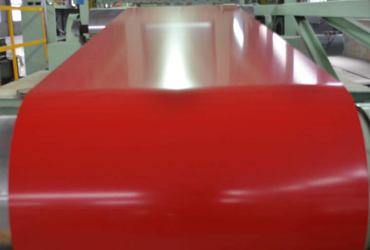
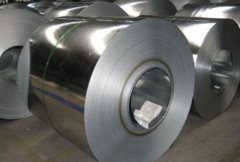
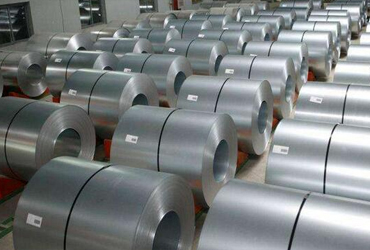
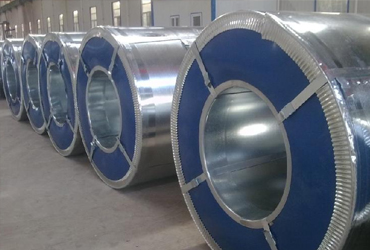
He added that the new grain-oriented electrical steel plant will serve as an "enhancement" to Big River's existing operations. B27G130 oriented electrical steel, Currently, Big River primarily produces non-oriented electrical steel (NOES) used in electric vehicle manufacturing; grain-oriented electrical steel, on the other hand, is used in the production of transformers and power grid equipment.
Another project is the previously announced direct reduced iron (DRI) plant, which will use the company's direct reduction (DR) grade pellets from its Minnesota mining operations to produce direct reduced iron, providing DRI feedstock for Big River's electric arc furnaces.
Burritt stated, "Construction always presents challenges, but we have extensive experience in building new capacity and bringing it online quickly."
U.S. Steel has invested approximately $7 billion in Arkansas. B27G130 oriented electrical steel, After acquiring Big River in 2021, the company invested another $3 billion to build Big River 2, which together form Big River Steel Works. In 2024, the company's economic contribution in Arkansas reached $2 billion, significantly higher than the $380 million in 2023.
The company directly employs 1,712 people locally, and the number of employees is expected to increase further after new projects come online.
According to the latest report, including supply chain and induced employment, U.S. Steel has created a total of 4,725 direct and indirect jobs in Arkansas. The company attributes the increased economic impact to increased operations and capital investment, increased procurement from local Arkansas suppliers, and a rebound in steel demand.
Domestic steel production is a key policy in Trump's second term. B27G130 oriented electrical steel, Currently, the US imposes tariffs of 25% (on imports from the UK) and 50% (on imports from other countries) on imported steel.
Despite US steel prices being $400 per ton higher than in some overseas markets, US steel mills are betting that future demand will rebound sufficiently to support a large-scale capacity expansion.
When asked whether import tariffs made the investment possible, Burritt said that appropriate tariffs "certainly helped" and thanked Trump for approving the Nippon Steel acquisition (which had previously been rejected by the Biden administration).
Unlike other U.S. Steel blast furnace plants, Big River uses the electric arc furnace (EAF) steelmaking route, which is less capital-intensive and has 70% lower carbon emissions than blast furnace steelmaking.
Economist Michael Pakko believes that the methods used to measure the economic impact of U.S. Steel are "conventional and reliable." He points out that Northeast Arkansas has become a typical "industrial cluster," with a complete workforce and a well-developed upstream and downstream ecosystem.